Liverpool FC | A Starter Pack For New Fans, Part One: Where We Are Now
The World Cup has come and gone, and as someone who decided to keep watching football after the 2010 World Cup, I remember how intimidating it can be to keep going and to dive into the world of club football. I knew from the start that watching the Premier League was probably the best one to follow, and if I hadn’t had a friend push me towards Liverpool, I may have given up before I even really got started due to the wealth of history that each club has.
Where do you even start when trying to pick a club? It could be easy - picking a color, picking a logo or a name or a city that you like. If you wanted to dig deeper, you could look at the history and their values. Or, you know, there’s always the trophies. The shame isn’t in picking a team that’s successful, it’s in whether or not you stick with them when the bad times come, because they come for everyone.
Everyone has to start somewhere.
If you’re reading this, it’s because you’ve decided to pick Liverpool. Maybe you’re a big Beatles fan, maybe you’re a red person instead of a blue person, maybe any of our players at the Cup caught your eye. Whatever your reason, thank goodness you’re here. You’ve chosen a team in flux, and though we have a storied pedigree, the ride has always been bumpy. Fans don’t call Liverpool “Always the Hard Way FC” for nothing.
I wanted to put everything you may need to know in one series, an easy reference to the history of LFC, how it informs the present, and hopefully works as a crystal ball to where we may be headed.
Liverpool’s new season starts on Sunday, August 23rd, so we’re going to kick things off with where we stand at present.
Present
Managers/Coaches
This is the easy bit. Liverpool have recently made another shift in the way the Club works, moving from having what is called a “manager” in football to a more American style “coach” leading the team.
In the past, the manager was exactly that - they managed the day to day of the squad, and the leading ideas and systems of how the squad worked. Managers were also, to varying degrees, involved in the business side of things like transfers.
Jürgen Klopp was Liverpool’s last manager, and his replacement Arne Slot was given the title head coach upon his appointment. Klopp was historically very involved in everything pertaining to the senior squad, from leading training sessions to bringing in a highly regarded nutritionist to control the players’ diets. There is even the alleged “no dickhead policy” that came with the German manager in regards to transfers to helped promote a serendipitous attitude throughout the Club. He brought up plenty of players from the Academy to make their senior debuts, and led the project of revamping the training ground to include the LFC Academy so young men would have the chance to break into the senior team.
Klopp and his team of assistant coaches, trainers, and analysts were the senior leadership for the men’s squad. It was this meticulousness and attention to detail that undoubtedly led to their years of success, but also to the burnout that Klopp admitted to when he announced his departure.
The football season is a marathon, not a sprint, and after nine years, Klopp’s race had been run.
Arne Slot took over the job in 2024, but with the new title of head coach instead of manager, revealing a change in focus for the Club and the men’s squad.
Traditionally, coaches are meant to oversee the players and most things on the pitch. The system and style of play, the management of players’ minutes, and working with the assistants and trainers to make sure everyone is well taken care of so they can do their best work on matchday. It does take a lot of the more administrative duties like worrying about transfers off of their plate, but that job then obviously moves to more business-minded colleagues and less on the ones actually working on the pitch.
Coaches are expected to produce results because their primary focus is the work on the pitch. While the head coach has the final say on who plays, how, and when, they work with their assistants and trainers to make the most of what they have.
Arne Slot was successful in his first year as coach in that he didn’t endeavor to make many changes, wanting to give the team around half the year to show him what they were capable of before instituting his own style of play. That worked for the most part, and Liverpool were able to secure their second Premier League title and 20th league title in his first season, but there were problems beginning to show around February of 2025.
There is no denying that the following summer would be hard for Slot to overcome, not only with the death of Diogo Jota just as preseason preparations were due to begin, but the departures of players like Darwin Nunez and Luis Diaz left gaps that unfortunately no one on the Club's business side of things were willing or able to fill.
Arne Slot’s second year at Liverpool would be full of turmoil, from the losses to protests over ticket prices and injuries galore. He was dismissed from the role shortly after the end of the 2025-26 season, this past May, and replaced with Basque coach Andoni Iraola.
Iraola came to us from Bournemouth, where he managed for three years and instituted a high intensity and proactive style of play. His system and focus on players recovering the ball quickly led to Bournemouth finishing sixth in the Premier League for the 25-26 season before his departure, and their first time qualifying for a European competition.
Needless to say, there is a lot of expectation on Iraola at the moment. Morale is down from the emotional and physical beatings we took last season, and there are still gaps in the squad that need to be filled. Thankfully Iraola, thoughtful and quietly passionate, seems to understand the gravity of the job ahead of him.
Players To Know
Captains
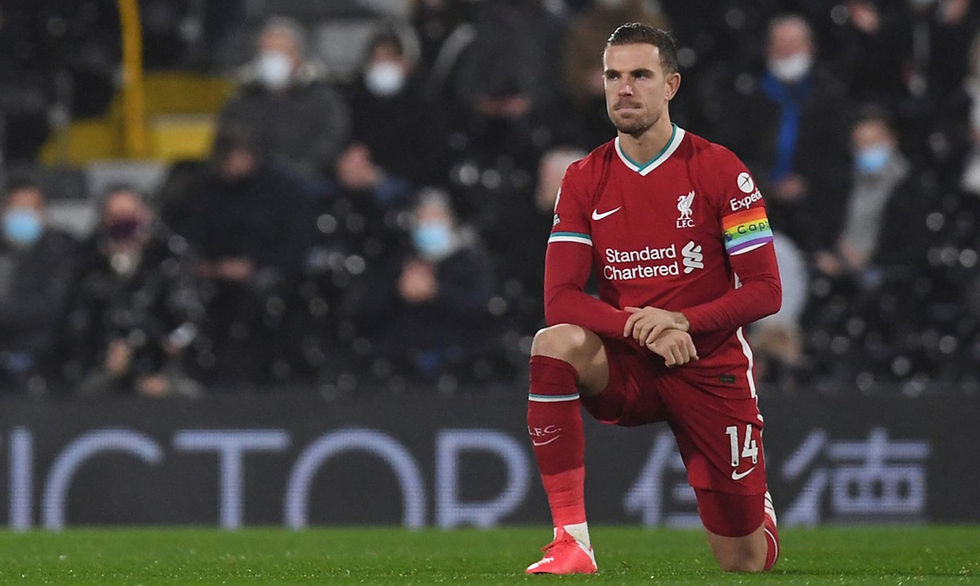
Center-back Virgil van Dijk has been the captain of Liverpool since 2023 when former captain Jordan Henderson decided to leave the Club for Saudi Arabia.
Van Dijk joined Liverpool in a blockbuster move in 2018, announcing the signing by posing with a Liverpool shirt on December 27, 2017 next to his Christmas tree. Liverpool had been struggling defensively for years prior to his arrival, and the addition of Van Dijk’s sometimes too calm demeanor in the back changed the game. Gifted with pace, an eye for a good header, and stopping an attack just before it gets scary, he is regularly considered one of the best defenders in the world.

Though his captaincy tenure has seen the squad face more adversity than joy, he has been one of the most reliable players since coming back from long term injury in the 2020-21 season. He played every single minute of last season, and signed a contract extension the season before to likely keep him at Liverpool until he retires (and at age 35, that might be closer than we want to believe).
Van Dijk was also named the captain of his native Netherlands in 2018, featuring in this year’s World Cup and the 2022 World Cup in Qatar, and the UEFA Nations League tournaments. He currently holds the record for appearances as captain for Netherlands, no small feat.
Vice Captains
In the Premier League, when the captain is unable to play for whatever reason, a vice captain is appointed to wear the armband in his stead. Last season it was the talismanic Scot Andy Robertson, but with his departure this summer the end of his contract (it still hurts to write), Iraola was given the chance to appoint three new vice captains in the unlikely event that Van Dijk is unable to play.
Goalkeeper Alisson Becker, defender Joe Gomez, and midfielder Dominik Szoboszlai have all been deputized this year, although Gomez is the only one to have held the role previously. Gomez is actually the most senior player on the squad, having joined Liverpool in 2015 before even Jürgen Klopp. His unfortunate injury record has kept him from making a bigger impact on the team, though, and so the most likely candidate to wear the armband this year if Virgil is unable to is Szoboszlai.
Captain of the Hungarian national team, Szobo joined Liverpool in 2023, and has since become a stalwart presence in the midfield. He was by far the best player on the squad last season throughout the troubles, and a natural appointment to the role as he is a prominent figure of the new generation of Liverpool men. You should see some of his free kick goals. Seriously.
New(ish) Signings
As of this posting the summer transfer window is still open, running from June 15 to 11pm BST on September 1, and though the women’s team has made some prodigious moves (more on them another time), the men’s team is having some difficulty getting the names that they want. We still have to fill roles left behind by the likes of the aforementioned Darwin and Diaz, but the loss of legend Mohamed Salah also looms large over this squad. That means there are forward wingers to find, another midfielder or two after the departure of Curtis Jones, and then the question of what to do with our defense (are the fullbacks we have good enough for the marathon ahead)?
Our first signing of the year, center-back Jeremy Jacquet, joined the squad in the summer after putting pen to paper in February and almost immediately getting injured. 21 year old Jacquet played most of his senior career with French club Rennes, and though he has since healed from the shoulder injury that kept him out of the back half of last season, Iraola has mentioned that they may be taking care with him until he is fully match fit.
Enter Ronald Araujo, joining Liverpool on loan from Barcelona, where he was appointed club captain in January of this year. The 27 year old Uruguayan center-back is known for being strong, excelling in one-on-one duels and timing challenges effectively, similarly to Van Dijk. Right footed, he is also comfortable playing in the right-back role, a position that was seemingly cursed last season, so even though there is no obligation to buy him at the end of the season (and at 300k/week wages, we probably shouldn’t) he will hopefully make a good stopgap as Iraola figures out how the players we have will fill into his system.
On the front end of things, the only player we’ve brought in is young Victor Munoz from La Liga side Osasuna. The 23 year old was just included in the World Cup winning Spain squad and though he was injured for the majority of the tournament, still appeared on the touchlines and at the trophy ceremony. Traditionally Munoz plays on the left wing, so ideally he will be able to fill the position left behind by Luis Diaz the summer before last. He prefers to drop behind opposition and has shown he has little boosters on his ankles that allow him to accelerate when needed and get past them.
There are also the signings like Florian Wirtz and Jeremie Frimpong that, though they signed last summer, may have finally adjusted to the rigors of the Premier League and finally be able to show their mettles. Wirtz in particular has spoken about playing in the number 10 position in the midfield to better dictate the tempo of play, and his movement with the ball this summer suggests he’s better prepared for the close physicality of the league. Frimpong’s biggest problem last season was injuries as he definitely did not seem physically prepared for the Premier League, so while there is little question he can contribute to the squad, the bigger question is if he can stay fit.
Another name to know this season is, of course, Liverpool’s current record signing Alexander Isak. Another season that was marred by injury troubles, Isak returned to the squad at the end of last season following a devastating literal broken leg. The striker joined Liverpool last summer for over 100m (don’t ask me the exact number please) after a long and arduous transfer saga with former team and first day opponents Newcastle. Lanky and with an eye for positioning, Isak knows that that high price tag comes with high expectations and with other striker Hugo Ekitike out until hopefully December with injury, the onus will definitely be on him to score goals, and score often.
Rivals
Liverpool is a Club with over 130 years of history. Of course we have rivals. These are the matches that everyone looks for first when the fixtures are released. For now, we’ll focus on the historic league rivals and the derbies (rivalry matches, pronounced dar-bee) that you need to plan your weekend around. These are the matches that everyone looks for first when the fixtures are released.
Everton
Reader, if there is a rival that you need to know, it is our crosstown older brother Everton. Up until last season, the bitter Blues played at Goodison Park, less than a mile across the road from Anfield. In truth, Liverpool FC would not exist without Everton, and the story of that will be in another post, but because of that animosity, there is a wealth of simmering anger and resentment. Now they play at their new stadium on the docks, named the Hill Dickinson Stadium, Liverpool christened it by winning the first derby hosted there last season.
When Liverpool and Everton play each other it is called the Merseyside Derby, named for the river that runs through Liverpool, the Mersey. Every team in the Premier League plays each other twice, home and away, so there are at least two Merseyside Derbies every year. There is also a chance to play them in the domestic cups, the FA Cup and the League Cup (professionally known as the Carabao Cup). The teams have played each other 248 times to this date, in all competitions, with Liverpool holding the most wins at 102, and Liverpool’s leading goal scorer Ian Rush scoring the most against them. The Merseyside Derby also holds the records for the most red cards issued, more than any other game in the admittedly short history of the Premier League.
In the city of Liverpool, you are either a Red or a Blue, and if you’re a Red, more likely than not the Blues want nothing to do with you. I have personally had many experiences in the city with Blues that have found out I’m a Red and treated me poorly. It is the nature of a true, long standing rivalry. And rightfully so. There should be real hostility when these games are played, because it’s a sign of passion and loyalty.
Tell an Evertonian you’re a Liverpool fan and get back to me with how that has gone.
Manchester United
I hesitate to say second most important rival, because in terms of history and hostility, they may be level with Everton. Manchester United. You know them, and hopefully if you are here, you hate them.
The Northwest Derby is one of the fiercest rivalries in football, fueled by the cities’ hate of each other. In terms of American rivalries, this is Boston-New York. This rivalry goes all the way back to the 18th century, as both cities became powerhouses of industry and commerce for the north of England. At one point 97% of all the world’s immigrants passed through Liverpool, such was the accessibility of its port, allowing it to play a major role in many different industries. That all changed in 1894 (two years after the formation of Liverpool FC) when Manchester would complete work on the Manchester Ship Canal, allowing much of that business to now bypass Liverpool and flow into Manchester.
Football is, and always has been (and always will be) a working person’s sport. So when tensions were building between Liverpool dockworkers and laborers in both cities, the best place to put it all would be the football. The first meeting of Manchester United (then called Newton Heath) and LFC in 1894 would draw first blood, as their loss led to United being stuck in the second division and Liverpool being allowed to move up to the first division.
Since then, it has been over a hundred years of back and forth fighting for football glory. Combined, both clubs have an eye watering 40 league titles, 21 FA Cups, 16 League Cups, 37 Community Shields, 9 European Cups (six of these are ours by the way), and as the end of the 2025 season, Liverpool leads the tally with 69 trophies in total, surpassing United’s 68. The Northwest Derby has been played 218 times across all competitions, just like the Merseyside Derby, with United unfortunately leading the wins in that category, but Mohamed Salah being the all time goal scorer against them, having scored 16 times in the nine years he was with Liverpool.
As with the Merseyside Derby, it is a vicious battle whenever these teams spar, holding the record for the second most red cards issued. This was all exacerbated by the success of United throughout the 90s and early 2000s, allowing them to overtake our trophy records and become one of the most recognized clubs in the world. The balance had finally shifted in the time under Klopp, as United fell into a rate of decline following the departure of their longtime manager Alex Ferguson.
United also have a new manager this season, with former player Michael Carrick being given the position permanently after a surprising turnaround last season that saw them finish above us on the table for the first time in a very long time. The matter of if they’ll be able to maintain that level of play is another thing entirely, but as both teams struggle the rivalry remains emotionally charged.
Manchester City, Chelsea, Arsenal
I am just putting this here because as a Liverpool fan, you will be challenged by fans of these teams. Have we had stretches of time as rivals with them? Yes. Manchester City pushed us to the limit during Klopp’s time, and if that verdict on their 115 charges of financial fair play malpractice comes down, who knows what would happen. We have lost literal trophies by centimeters to them, but they are also in a state of change with the departure of Pep Guardiola, so what was once a white hot rivalry may have fizzled out.
The London teams have also pushed us for trophies and accolades in the past, with Arsenal winning the league over us in the 80s (and it took a literal tragedy for that to happen, but that's in the next post) and challenging us more recently, but the history of these teams don’t hold a candle to the derbies mentioned above.
Do fans of these teams that try to test you and debate you deserve your energy? No.
Being A Female Fan
Joining a sport as a female fan, even simply as a supporter, inherently comes with its challenges. Unfortunately it is not lost on me, or anyone else.
From my experience, being a female Liverpool fan has luckily been more accepting than I could have ever imagined. Even online, the fan community has always been more welcoming, allowing me to learn and join in without feeling like I’m joining a big boy’s club. There will be detractors anywhere you go, and though I have had my fair share of experiences with them in this fandom, they are gratefully few and far between.
Liverpool fans value passion above all else. Though there is plenty of history to learn - that’s my next post - if you are willing to get involved, allow yourself to be taken in by the game and community, and participate, you are rewarded with open arms. We value stories and characters more than numbers and stats. It is a romantic Club, and emotion comes with the territory. Like anything, it takes effort, and well intentioned effort.
The best tip that I can give to any new Liverpool fan is to get involved in your community. Join your local OLSC (Official Liverpool Supporters Club), watch the matchdays with them, learn the songs and the chants, and make yourself available to everyone around you. The Liverpool website has a full list of OLSCs, and if there isn’t an official one near you, I guarantee that may be an unofficial club nearby. And if there isn’t even that, Liverpool FC has one of the biggest fanbases in the world. You can find a place to watch and most assuredly someone else to watch with.
If you’re in the Los Angeles area, the best place to do that is with LFCLA at The Irish Times Pub in the Palms neighborhood. I’ve been part of the club for over ten years now, and credit it and everyone involved with making me the fan that I am. Waking up early (Los Angeles is 8 hours behind Liverpool after all), making the pilgrimage from my home to the bar, and singing and supporting the team from afar is a blessing that I do not take for granted.
That’s where I’ll be on Sunday, wearing my new home shirt, with this laptop, writing a recap for the other website.
If you’re free, won’t you join me? Everyone has to start somewhere.

Comments